Best Free Puzzle Games That Respect Your Time
Almost every free puzzle game on the web is monetised the same way: a timer, a lives counter, and a shop that sells you more of both. The puzzle becomes a waiting room for an advert. It does not have to be that way — a puzzle with no timer is still a puzzle, and usually a better one.
We build these games ourselves, so this list is not a ranking of other people's work. It is five of our own puzzles, each picked because it does one specific thing well, with the measurement that proves it is not just an opinion.
1 A puzzle should end, not just stop
Block Fit hands you three blocks at a time and an eight-by-eight board with no gravity. You put each block wherever you want; full rows and columns clear, and cleared cells do not collapse. The run ends when none of your three blocks fits anywhere — not when a clock runs out.
That single rule changes the whole feeling. There is no punishment for thinking, only for placing badly, and the board is always the honest report card of your last twenty decisions. We measured 120 AI runs to check the difficulty curve was real: the median run lasted 128 drops, and three quarters went past 80.
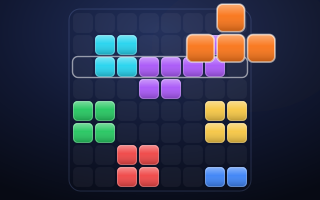 Play Block FitNo gravity — put every block where you want it
2 The best rule in the genre is still four by four
2048 has one rule: slide the whole board, and equal tiles that touch become one. Everything else — the goal, the tension, the exact moment you realise the corner is blocked — falls out of that. It is the cleanest design in the genre and nobody has improved on it since 2014.
Our version is 442 lines in a single file. There is no engine, no sprite sheet and no loading screen, which is why it opens before your thumb leaves the screen. The whole game is smaller than one icon in most mobile apps.
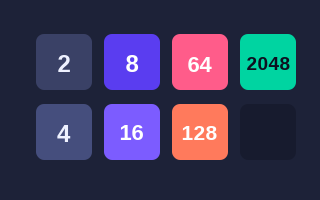 Play 2048Merge the tiles, chase the 2048
3 Difficulty can come from the board, not a countdown
Arrow Out fills the screen with winding lines, each one a single piece that ends in an arrowhead. Tap a line and the whole body slides out after the head — if the lane from that arrowhead to the edge is empty. Anything in the lane blocks it, the line springs back, and that tap costs one of three hearts.
There is no timer, and there are no dead ends. Levels are built backwards: every line is placed in a spot where it could already have left, so the placement order read in reverse is a guaranteed solution. Removing a line only ever frees cells, which means a wrong tap can waste a heart but can never ruin the board. What makes a late level hard is reading a board of forty overlapping lines — not the clock.
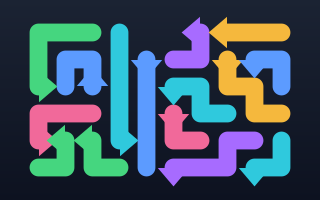 Play Arrow OutTap a line, and the whole line leaves
4 Show the difficulty instead of hiding it
Sudoku is the rare puzzle where "easy" and "hard" are not marketing labels — a hard grid simply requires more advanced elimination before a cell can be filled. We let you pick Easy, Medium or Hard up front rather than guessing for you with a hidden skill estimate.
The interface does one job: show you a nine-by-nine grid and get out of the way. No hint currency, no "watch an ad for a free cell". If you are stuck, you are stuck, and that is the point of the game.
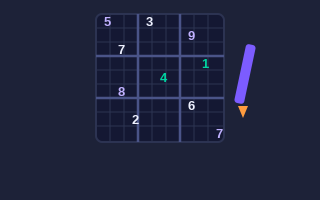 Play SudokuEvery row, column and box needs 1-9
5 Reward the chain, not the wallet
Star Pop is a match game with a combo multiplier: clearing quickly in a row is worth far more than clearing slowly, so the interesting decision is when to stop setting up and start cashing in. That is a real risk-reward loop, and it does not need a single microtransaction.
It is also the smallest kind of game we ship — one file, no assets, no network requests. The entire game weighs less than the average cookie banner.
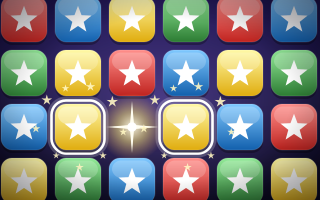 Play Star PopPop matching stars, chain the combos
Key takeaways
For players
- If a free puzzle game has an energy meter, the puzzle is not the product.
- A timer makes a puzzle test speed; removing it makes the puzzle test thinking.
- Boards you can read at a glance are worth more than boards with more pieces.
For developers
- Ship the board state as a plain data structure so a solver can test it headlessly.
- Measure your difficulty curve over a hundred runs, not over the three you played.
- A solvable-by-construction generator removes dead ends without needing hints.