Classic Browser Games That Still Hold Up
A classic game is one whose rules fit in a sentence and whose consequences do not. Tetris, Snake, Pong and solitaire have all been rewritten thousands of times, and the good rewrites have one thing in common: they do not "improve" the rules.
These five are rebuilt from scratch, as single HTML files with no engine. The mobile controls are new, because a phone is not a keyboard — but the games themselves are the ones you already know.
1 Tetris: the loop is the product
Tetris has no story, no progression and no unlockables, and it has outlasted almost everything that had all three. The loop is: a piece falls, you place it, a line clears or it does not. Every decision is irreversible within seconds, which is why it holds attention so well.
Our build is 37 KB in one file. Line clears, hold, next-piece preview and increasing gravity are all there; what is missing is the part where the game asks you to buy something.
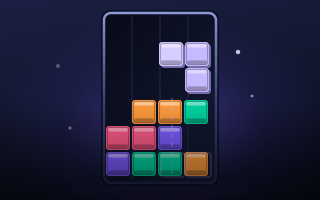 Play TetrisStack the blocks, clear the lines
2 Snake: the smallest arcade game that works
Snake is the proof that you do not need much. One player, one apple, one rule about walls, and a tail that turns your own past into an obstacle. It was designed for a 1997 phone screen and it has never needed a bigger one.
The version here is 285 lines. The interesting engineering is not the drawing, it is the input buffer — on touch screens you have to accept a turn slightly before it is physically possible, or the game feels broken at speed.
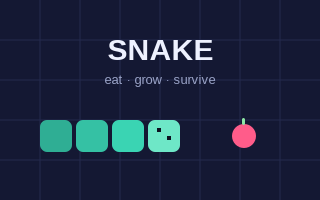 Play SnakeEat, grow, and do not bite yourself
3 Ping Pong: why two paddles are enough
Pong works because the ball is the only thing that matters and the players control the two things that can affect it. There is no inventory, no build order, no meta. Two people, one ball, first to five.
What a modern rebuild has to add is honesty: the paddle must move at the speed of the input, and the ball must bounce off the edge of the paddle rather than a single centre point. Get those two right and 1972 rules still entertain a room.
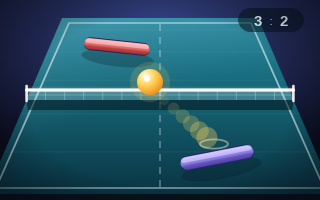 Play Ping PongFirst to 5 points takes the table
4 Solitaire: patience as a mechanic
Spider Solitaire is the quietest game on the site. No clock, no opponent, no reaction time — just a deck, ten columns and a long sequence of small decisions that only reveal their consequences later.
It is also the hardest thing here to write correctly. Undo, redeal, run detection and the auto-finish all have to agree about the same board state, or the game quietly corrupts itself. Ours is 1,189 lines, and most of them are rules, not graphics.
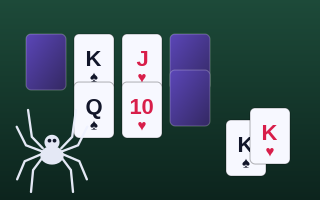 Play Spider SolitaireBuild King-to-Ace runs and clear the table
5 2048: the newest classic here
2048 is young enough that people still remember the week it appeared, but its design is already classical: one gesture, one rule, one number to chase. It also has a property most modern games lack — a game you can finish in ten minutes and still feel was worth it.
The 4x4 board is the entire difficulty setting. On the same grid, an expert and a beginner are playing the same rules with wildly different results, which is the definition of a good abstract game.
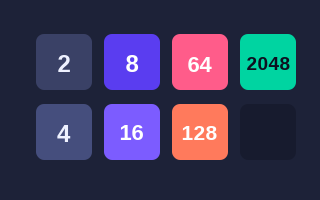 Play 2048Merge the tiles, chase the 2048
Key takeaways
For players
- The classics have no onboarding because the first move teaches the rules.
- A game without progression can still hold attention if the loop is honest.
- Solitaire is the original single-player game and still the best-paced one.
For developers
- Do not add features to a classic; make the input and hitboxes feel exact.
- On touch, buffer turns slightly ahead or fast play feels broken.
- Separate rules from rendering — that split is what makes undo and redeal possible.