Free Brain Games That Are Actually Hard
A game is hard when the next move is not obvious, not when it moves faster than you can see. Most things sold as brain training confuse the two — they test reaction time and call it thinking.
The five games below are hard in the slow way. Each one can be paused mid-thought, none of them score you on speed, and when you lose you can usually point at the exact decision that did it.
1 Hard means the next move is not obvious
A Sudoku grid has one right answer and no hidden information, which makes it the purest logic puzzle on the site. An easy grid falls to basic scanning; a hard one requires you to hold several candidate sets in your head at once and eliminate across boxes, rows and columns.
That is real difficulty, and it does not need a clock attached. Pick your level, take as long as you like. The only thing being measured is whether you can reason.
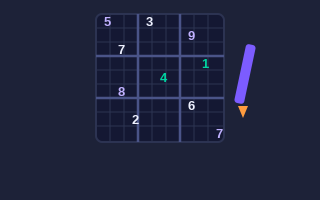 Play SudokuEvery row, column and box needs 1-9
2 The endgame is the real game
The first thousand points of 2048 are a warm-up. The game becomes hard when the board is half full of large tiles and every slide risks sealing the corner you have been protecting for ten minutes.
That is a planning problem, not a reflex problem — which is why the game works just as well on a keyboard as on a phone. The board tells you everything; the skill is in the order you move.
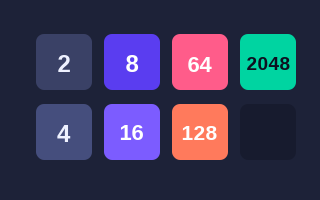 Play 2048Merge the tiles, chase the 2048
3 Planning under uncertainty
Spider Solitaire is hard for a different reason: you can plan perfectly and still lose, because some of the information is still in the deck. Good play means arranging the cards you can see so that almost any card you turn over is useful.
It is the closest thing here to real decision-making — incomplete information, delayed consequences, no undo in the physical game and a very welcome undo in ours.
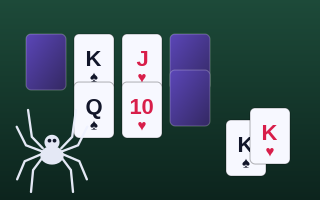 Play Spider SolitaireBuild King-to-Ace runs and clear the table
4 Scanning a dense board is a skill
Arrow Out is not a logic puzzle in the Sudoku sense — every level is solvable and no move can ruin the board. The difficulty is visual: with forty winding lines packed into a ten by nineteen grid, finding the handful whose arrowhead has a clear lane takes real concentration.
It is the same skill as reading a chess board, compressed into twenty seconds. And because blocked taps only cost a heart, a wrong guess teaches you something instead of ending the run.
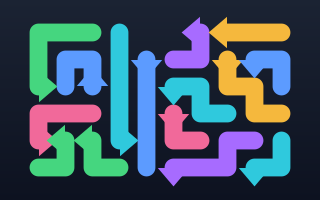 Play Arrow OutTap a line, and the whole line leaves
5 Packing is harder than it looks
Block Fit looks like a casual block game until the board is two-thirds full. Then every placement is a bet: fill the wrong cell and the three blocks you are holding may not fit anywhere, even though thirty cells are technically empty.
"Space is not the same as room" is the lesson of the game. Over 120 measured runs the median lasted 128 drops, and the runs that ended early almost always died to a shape that had nowhere to go rather than to a bad clear.
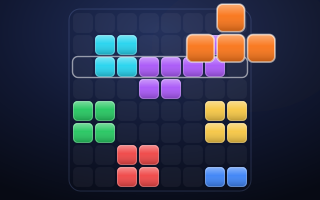 Play Block FitNo gravity — put every block where you want it
Key takeaways
For players
- Speed is not difficulty; a clock only hides whether a puzzle is deep.
- If you can point at the move that lost the game, the game is fair.
- Incomplete information (solitaire) and dense scanning (Arrow Out) are two different skills.
For developers
- Separate "hard to solve" from "hard to see" — they need different tuning.
- A generator that guarantees solvability lets you make boards as dense as you like.
- Measure run length distributions, not averages: the shortest runs are the real design.
- Never hide difficulty behind a hidden skill estimate; let players choose.